Research Interests
I am interested in investigating extended models of the Universe, to see if they could answer some of the questions that we face with the concordance LCDM model.
Modified Gravity Theories
My PhD thesis invovled investigating a specific class of modified LCDM models, the coupled dark energy model, and its potential to alleviate tensions in cosmology.
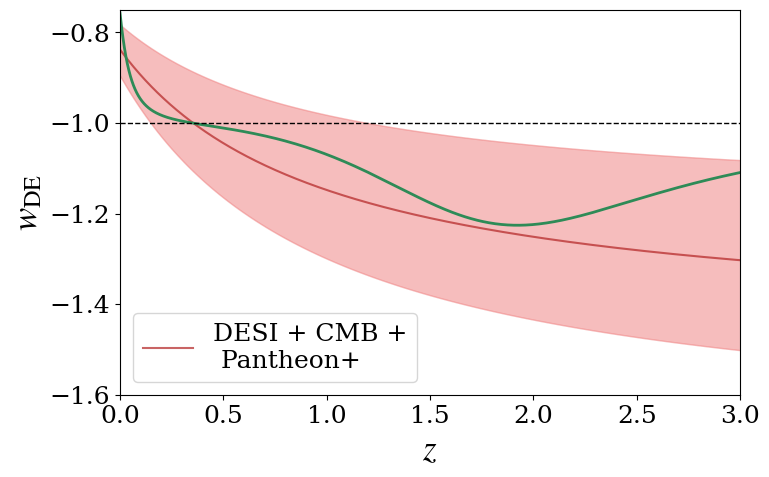
Recently, we investigated two-scalar field quintom models that allow the equation of state (EoS) of dark energy to cross the phantom divide (w=-1). Motivated by recent observational hints from DESI BAO and Type 1a supernovae data, we explored different forms of potentials for the quintessence and phantom fields that could naturally realise a phantom to quintessence type crossing of the EoS parameter.
Cosmology with Euclid
I am a member of the Euclid Consortium and contribute to the Inter-Science Taskforce: Likelihood (IST:L), where I help develop the Euclid likelihood framework, Cosmology Likelihood for Observables in Euclid (CLOE). We have obtained forecasts on cosmological constraints with the key Euclid probes of cosmic shear, galaxy-galaxy lensing and galaxy clustering, across different cosmological models and analysis choices.
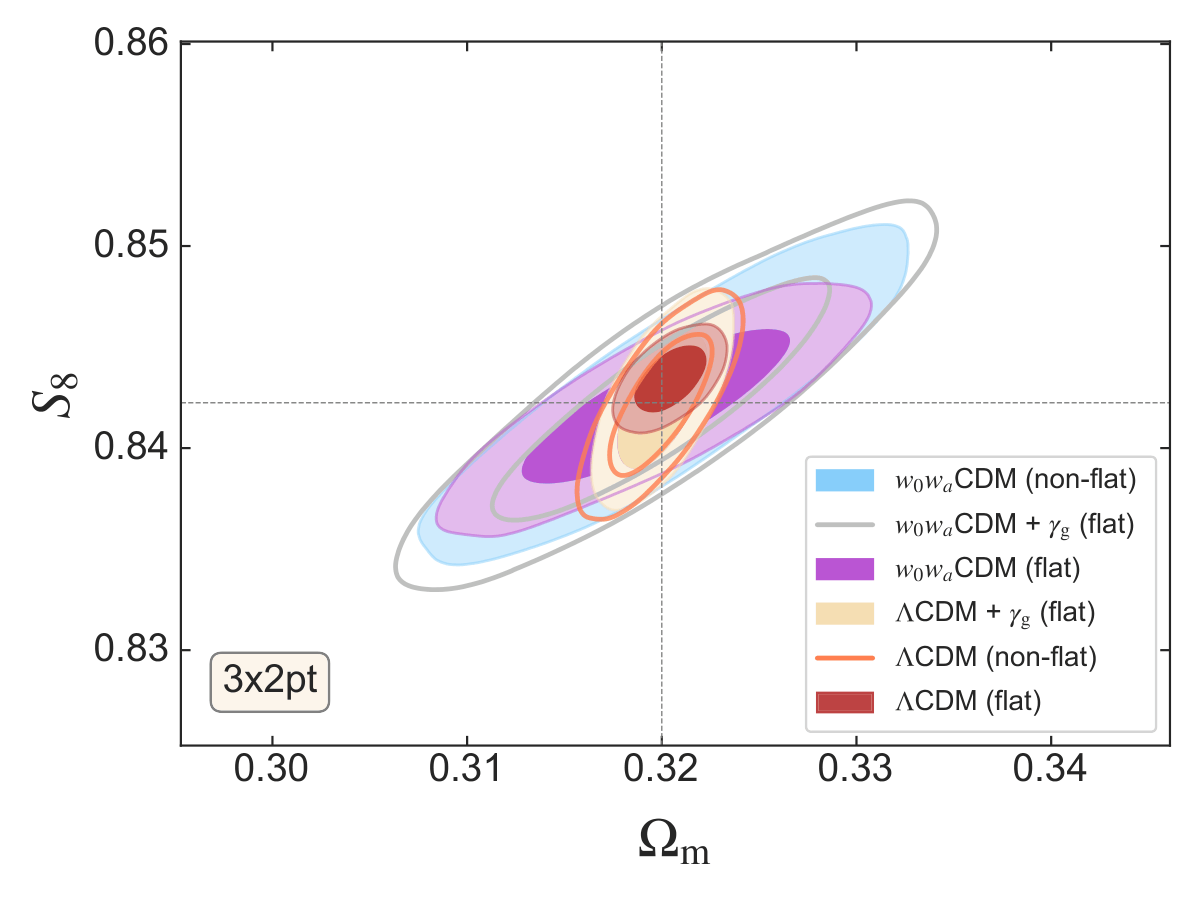
Currently, I contribute to the development and maintenance of the core libraries, cloelib and cloelike, which provide the foundation for likelihood evaluation and parameter estimation within the collaboration.
Cosmology with UNIONS
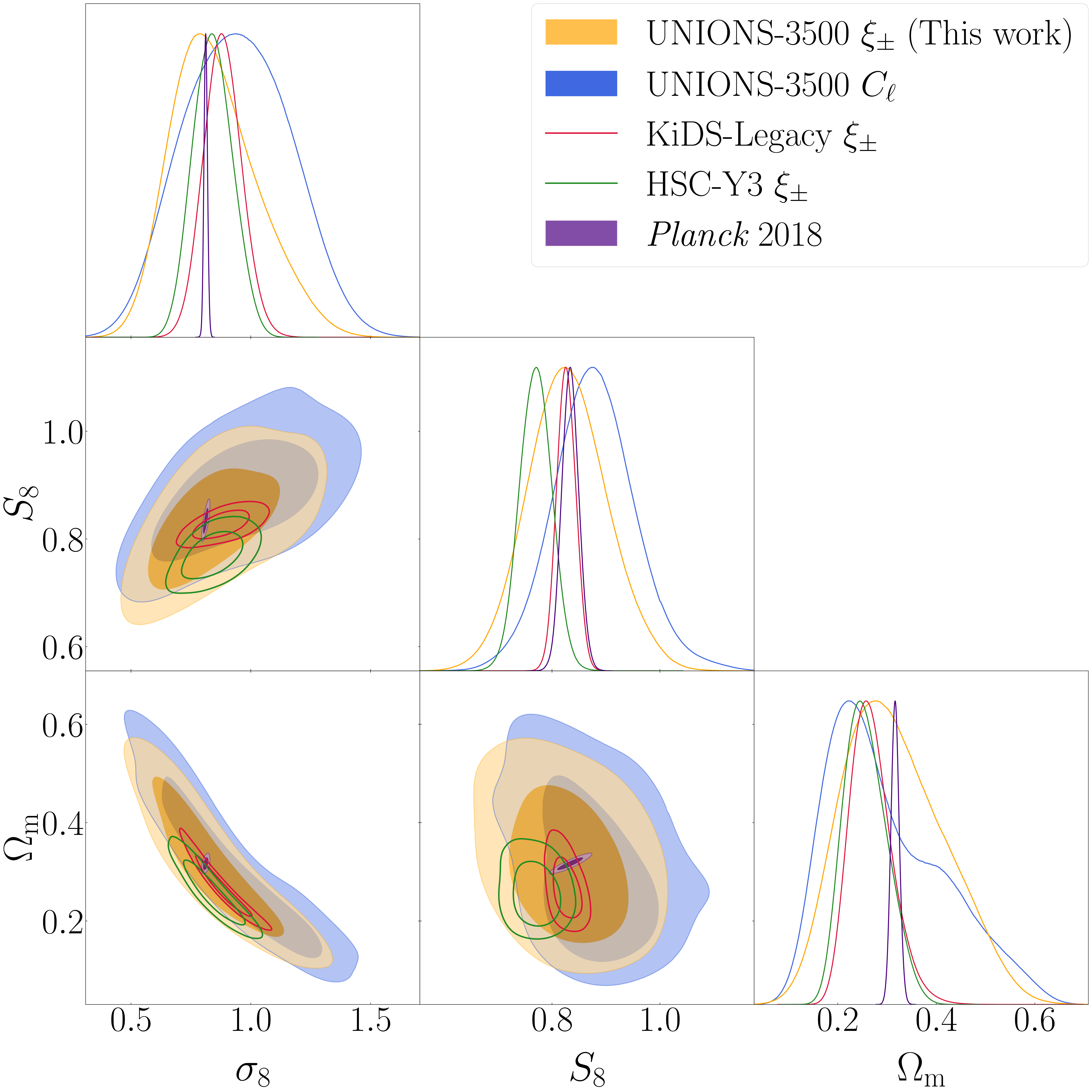
I am also a member of the Ultraviolet Near-Infrared Optical Northern Survey (UNIONS) collaboration, a multi-telescope imaging programme bringing together three ground-based facilities in Hawai‘i to produce one of the most detailed wide-field galaxy maps of the northern sky to date. Within UNIONS, I have worked on developing and validating the likelihood inference pipeline used to extract cosmological constraints from cosmic shear measurements. This has included everything from early-stage testing of galaxy catalogues and systematics checks to the delivery of a robust, end-to-end analysis pipeline for one of the final Stage-III weak lensing datasets. This work directly contributed to the release of the UNIONS-3500 weak lensing catalogue, including cosmological constraints derived from a 2D cosmic shear analysis with UNIONS.